Rheumatoid Arthritis Awareness Week 2018
Posted on
Rheumatoid Arthritis Awareness Week: Holistic Support and Aromatherapy
Today marks the start of Rheumatoid Arthritis Awareness Week, run by the National Rheumatoid Arthritis Society.
Rheumatoid Arthritis (RA) is an autoimmune condition in which the immune system mistakenly attacks the lining of the joints. This can cause inflammation, pain, swelling and stiffness. Without appropriate treatment, ongoing inflammation can damage the joints and affect their shape, alignment and function.
Rheumatoid Arthritis is a serious condition that requires appropriate medical care, but complementary therapies such as massage, aromatherapy and Reiki may also have a place alongside conventional treatment to support relaxation, comfort and overall wellbeing.
Key Facts About Rheumatoid Arthritis
Rheumatoid arthritis can affect people of any age. Around three-quarters of people with rheumatoid arthritis are first diagnosed during their working years, and women are around three times more likely than men to develop the condition.
Rheumatoid arthritis is also often confused with osteoarthritis. Although both conditions can cause joint pain and stiffness, they are very different. Rheumatoid arthritis is an autoimmune disease, whereas osteoarthritis is primarily associated with changes to the structure and function of the joints.
More than 400,000 people in the UK are estimated to have rheumatoid arthritis, making it an important condition to raise awareness about.
Conventional medical treatment for rheumatoid arthritis can include medication, physiotherapy and, in some cases, surgery. Complementary therapies may be used alongside medical treatment to support relaxation, comfort and quality of life.
Holistic Treatments for Rheumatoid Arthritis
In terms of the treatments I offer, Aromatherapy Massage may be suitable for some people with rheumatoid arthritis, depending on their individual circumstances and whether they are experiencing an active flare-up.
Aromatherapy massage can provide several potential benefits:
- Relaxation and comfort
- Gentle massage can be deeply relaxing and may help ease muscular tension and provide a sense of comfort. For some people, this can also make everyday aches and stiffness feel more manageable.
- Supporting emotional wellbeing
Living with a chronic condition can be physically and emotionally challenging. Massage and aromatherapy provide dedicated time to relax and switch off, while the aromas of essential oils can create a calming and uplifting experience.
A personalised aromatherapy experience
Essential oils are highly versatile and are commonly used in aromatherapy to support both physical and emotional wellbeing. Different oils have different properties and aromas, which means that an aromatherapy blend can be personalised according to your preferences and treatment goals.
Important: Massage During an RA Flare-Up
During an acute rheumatoid arthritis flare-up, when the joints are particularly painful, swollen or inflamed, massage may not be appropriate.
In these circumstances, I would recommend speaking with your healthcare professional about your symptoms and treatment.
If you would still like a relaxing complementary therapy without massage or physical manipulation, Reiki may be a more suitable option to consider.
Reiki is a gentle treatment that does not involve massage or manipulation of the body. It can be carried out while you are comfortably seated, which can be particularly helpful if lying on a massage couch is uncomfortable.
As with all complementary therapies, Reiki should be viewed as supportive wellbeing care rather than a treatment or cure for rheumatoid arthritis.
Personalised Aromatherapy Products
Essential oils can be used in different ways, including topical products and inhalation. However, the way an essential oil is used affects how much exposure you have to its individual components.
When essential oils are used in a wash-off product such as shower gel, facial wash or soap, there is very little contact time with the skin. Aromatherapy through inhalation is primarily experienced through the nose and respiratory system rather than relying on absorption through the skin.
Essential Oils Commonly Used in Aromatherapy
Different essential oils are traditionally chosen in aromatherapy for their particular properties and aromas.
For relaxation and calming:
Lavender, Roman Chamomile
For a warming and comforting massage blend:
Lavender, Roman Chamomile, Sweet Marjoram, Black Pepper, Ginger
Black Pepper and Ginger are warming, stimulating essential oils and may not be appropriate for everyone, particularly when joints are acutely hot or inflamed. This is why personalised aromatherapy advice is important.
For an uplifting aroma:
Sweet Orange, Bergamot, Ylang Ylang
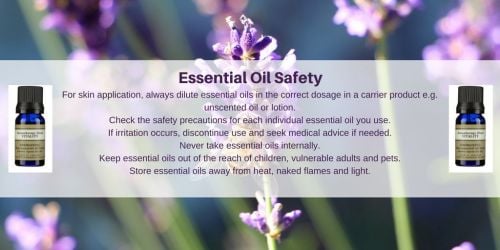
Essential oils are concentrated substances and should always be used safely and appropriately. Some oils are not suitable for certain individuals, medications, health conditions or circumstances, which is why professional advice is particularly important when creating a personalised blend.
Learning to Use Essential Oils Safely
If you haven't used essential oils before, I also have a beginner's eBook which explains how to use them safely and responsibly.
Aromatherapy can be a wonderful addition to a holistic self-care routine, but it is important to understand how to use essential oils correctly.
Living With Rheumatoid Arthritis
Rheumatoid arthritis can be a painful and debilitating condition, and everyone experiences it differently.
Alongside appropriate medical treatment, finding ways to relax, manage stress and look after your emotional wellbeing can be an important part of living with a long-term condition.
If you're considering a complementary therapy, always let your therapist know about your diagnosis, medication and any current symptoms before treatment.
If you are experiencing an acute flare-up, significant swelling or severe pain, please seek appropriate medical advice rather than relying on complementary therapy.
I hope you have found this post useful.
For more information and support about rheumatoid arthritis, I recommend visiting the National Rheumatoid Arthritis Society, which provides a wealth of information and resources for people living with rheumatoid arthritis.
Until next time
Zoe
x
